Today, the web is such an essential part of our lives that it’s hard to imagine a world without the immediacy of communication, entertainment, and information. But every interaction, every technological giant, and every viral phenomenon had a starting point: a “first moment” that changed everything.
Behind the vastness of the network lie the foundational milestones that shaped the cyberspace we know today. From the birth of the World Wide Web to the explosion of social media, each of these instances was a giant step in modern history.
Join us on a fascinating historical tour to discover the exact moments when the web took its first, unforgettable steps. We will explore everything from the moment the first domain was registered and the official first internet page was loaded, to the milestones that defined interaction: the first image uploaded, the first webcam transmission, the first Tweet, the first YouTube upload, and how it all started with the first Facebook profile, among other crucial moments.
Get ready to travel back in time and relive the moments where the future got connected.
📧 The First Electronic Mail (Email)
While the World Wide Web (WWW) was created in 1991, the ability to send messages electronically across a network dates back much further and is considered one of the most fundamental “firsts” of the entire internet structure.
Key Facts:
| Element | Detail |
| Pioneer | Ray Tomlinson |
| Year Sent | 1971 |
| Network | ARPANET (the predecessor to the Internet) |
| The Message | The content was reportedly unimportant—likely a test string like “QWERTYUIOP”—as the goal was to test the mechanism, not the communication. |
| The Key Innovation | Tomlinson is credited with inventing the use of the @ symbol (at) to separate the user’s name from the host computer’s location (e.g., user@host), a standard still used globally today. |
Historical Significance:
Tomlinson’s work fundamentally changed network communication. Before this, messages could only be sent between users on the same mainframe computer. By adapting a file transfer program to send messages between different computers on the ARPANET, he created the first true networked email system, setting the stage for global digital correspondence.
First Registered Domain: The Starting Gun
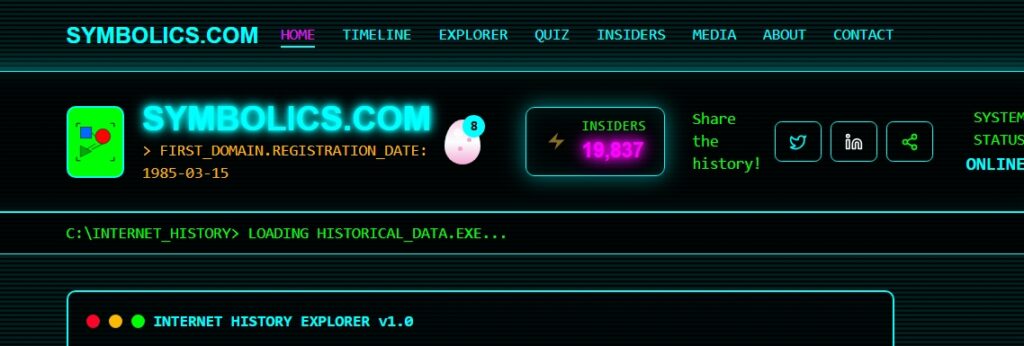
Before websites as we know them existed, a naming system was needed to identify machines. The creation of the Domain Name System (DNS) in 1983 paved the way.
The first official registration of a domain with the .com extension marked the beginning of the commercial internet era, long before the World Wide Web even existed.
Key Facts:
| Element | Detail |
| Domain Name | Symbolics.com |
| Registration Date | March 15, 1985 |
| Registrant | Symbolics, Inc. (A Massachusetts computer company) |
| Location | Cambridge, Massachusetts, USA |
| Importance | It was the first name in history to end with the .com extension, establishing the standard for online commerce. |
Historical Significance:
Symbolics, a company dedicated to the development of programming languages and artificial intelligence, made history by claiming the first commercial domain name. Although the domain was not used for a modern website until much later, its registration symbolized the moment when the Internet began to transition from being a purely academic and military network to a commercial space. Today, the domain still exists as a tribute to that historic moment.
visit here Symbolics.com – The First Domain Name Ever Registered on the Internet
The First Website and Web Page
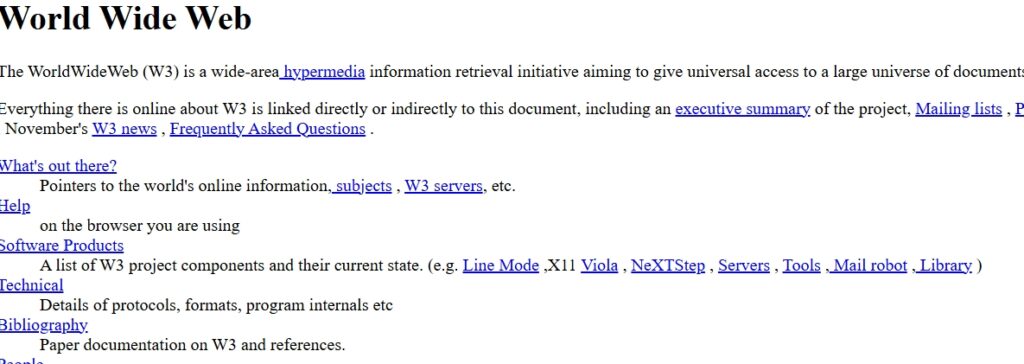
The first-ever website and web page were created by Tim Berners-Lee, a British computer scientist, while he was working at CERN (European Organization for Nuclear Research) near Geneva, Switzerland.
Key Facts:
| Element | Detail |
| Creator | Tim Berners-Lee |
| Launch Date | August 6, 1991 |
| The Server | A NeXT computer at CERN |
| Purpose | To explain the concept of the World Wide Web (WWW), how to set up a web server, how to create your own website, and how to use a web browser. |
| URL (Original) | http://info.cern.ch/hypertext/WWW/TheProject.html |
| Current Status | A copy of the original page is still hosted and viewable at CERN. |
Significance:
The website was fundamentally a documentation project. It was created to demonstrate the core principles of Berners-Lee’s three fundamental innovations: HTML (HyperText Markup Language), HTTP (HyperText Transfer Protocol), and URLs (Uniform Resource Locators). It served as a directory and a guide, containing links to other pages as they were created, making it the central hub of the nascent World Wide Web.
visit here The World Wide Web project
The First Image Uploaded to the Web
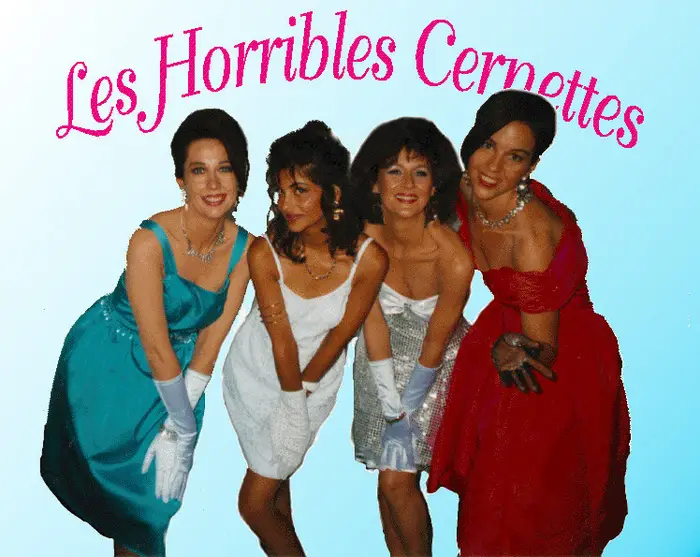
The first photograph to be uploaded and displayed on the World Wide Web fundamentally changed the internet from a text-only medium to a rich, multimedia experience.
Key Facts:
| Element | Detail |
| The Image Subject | “Les Horribles Cernettes” (a pop/singing group composed of female employees and partners at CERN) |
| Uploader | Silvio de Gennaro (CERN analyst and manager for the Cernettes) |
| Year Uploaded | 1992 |
| Context | Tim Berners-Lee, the inventor of the Web, asked Gennaro for pictures to upload onto the CERN website to demonstrate a new feature of the browser that could handle images inline with text, moving past the text-only standard. |
| Significance | This image proved that the web could be visual and entertaining, paving the way for graphical browsers (like Mosaic) and eventually the modern, multimedia internet. |
The Story:
In 1992, the World Wide Web was still a technical curiosity, primarily displaying simple text and hyperlinks. When Berners-Lee was working on a version of the web browser that could show images directly on the page, he needed content to test it. Silvio de Gennaro provided a photo of his band, Les Horribles Cernettes, making them internet legends by accident. This moment showed the potential of the web to be a cultural, not just scientific, platform.
The First Webcam Transmission: The Trojan Room Coffee Pot
The debut of webcam technology wasn’t a scientific breakthrough or a major broadcast; it was simply about coffee. This seemingly mundane experiment proved the World Wide Web’s capability for continuous visual data transmission.
Key Facts:
| Element | Detail |
| Subject | A coffee pot in the Trojan Room of the Computer Laboratory at Cambridge University (UK). |
| Year Launched | 1993 (made accessible via the World Wide Web) |
| Original Purpose | To allow researchers and staff to remotely check if the coffee pot was empty before making the wasted walk across the hallway. |
| How it Worked | A camera captured low-resolution images of the coffee pot, which were updated roughly once every minute and displayed on the office’s internal network, and later, the Web. |
| Status | The camera operated for 10 years before being finally switched off in 2001. |
Historical Significance:
The Trojan Room Coffee Pot cam was the world’s first webcam and an unexpected global sensation, drawing millions of visitors simply wanting to watch a coffee pot.
It showed the potential of the internet to provide remote, near real-time visual information on demand. This humble camera laid the groundwork for everything from security cameras and live video conferencing to modern live streaming platforms, proving that people were fascinated by watching everyday life unfold online.
The Longevity King: San Francisco FogCam!
visite here FogCam – The World’s Oldest Webcam
While the Trojan Room Coffee Pot holds the title of the very first webcam, the San Francisco FogCam! is celebrated as one of the world’s longest-running webcams, demonstrating the enduring appeal and simplicity of the technology.
| Element | Detail |
| Name | FogCam! |
| Year Launched | 1994 |
| Location | San Francisco State University (SFSU) |
| Significance | It is one of the oldest webcams still operating, having offered continuous views of San Francisco for decades, started by students Jeff Schwartz and Chris Hitchcock. |
| Note | Though it announced its retirement in 2019, it was resurrected and still holds the title as one of the oldest streams on the internet. |
First Web Content Search Engine: WebCrawler
While Archie was the first engine to index FTP files and Yahoo! started as a directory, WebCrawler was the first to index and make the full text of World Wide Web pages fully accessible to the user, marking a radical shift in how we navigate.
| Element | Detail |
| Search Engine | WebCrawler |
| Launch Date | Early 1994 |
| Creator | Brian Pinkerton |
| Significance | It was the first search engine with the ability to index all the text within web pages, not just titles or URLs. |
| Context | Before WebCrawler, finding something on the web was like looking for a needle in a haystack; you needed a directory or to know the exact address. WebCrawler made the web truly searchable. |
First Product Sold by Amazon
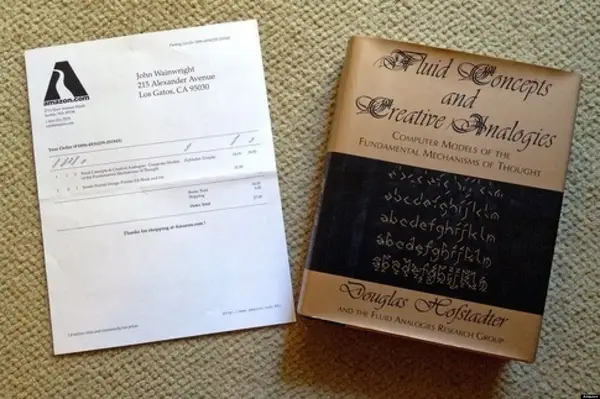
The beginning of Amazon, now the global e-commerce giant, was modest, focusing exclusively on selling books. The first product sold marked the true start of the online store.
| Element | Detail |
| Product | Fluid Concepts and Creative Analogies: Computer Models of the Fundamental Mechanisms of Thought |
| Author | Douglas Hofstadter |
| Sale Date | Sold in early July 1995, shortly after Amazon’s official launch. |
| Buyer | John Wainwright, a computer engineer from California. |
| Significance | This sale proved that Jeff Bezos’ business model (selling products online) was viable and functional, kicking off the e-commerce revolution. |
The First Item Sold on eBay
eBay (originally named AuctionWeb) was founded in 1995 by Pierre Omidyar. Unlike Amazon, which started as a professional bookstore, eBay focused on allowing ordinary people to sell used goods.
| Element | Detail |
| Item | A Broken Laser Pointer |
| Sale Date | 1995 |
| Sale Price | $14.83 USD |
| Buyer | A collector of broken laser pointers. |
| Context | The founder, Pierre Omidyar, reportedly contacted the buyer to ask if they truly understood that the item was broken. The buyer replied yes, that they collected broken laser pointers. |
| Significance | This transaction demonstrated the platform’s power: that anyone could find a global market to sell anything, no matter how unusual the item. |
The Birth of Google: The First Domain
Before it was called Google, the project was known as “Backrub.” Its founders, Larry Page and Sergey Brin, were looking for a name that reflected the vast amount of information the search engine would index.
| Element | Detail |
| Domain Registered | Google.com |
| Registration Date | September 15, 1997 |
| Founders | Larry Page and Sergey Brin |
| Previous Name | Backrub |
| Name Origin | The name “Google” is a play on the mathematical term “Googol” (a 1 followed by one hundred zeros), symbolizing the ambition to organize an infinite amount of information. |
| Significance | The registration of this domain marked the official start of the company that would revolutionize the way the world finds and accesses information online. |
👤 The First Facebook Profile
Launched as “The Facebook” from a Harvard dorm room, this platform rapidly redefined how people connect, share, and establish their identity online. Identifying the absolute “first” profile is tricky, as the initial accounts were test runs, but the first human profiles belong to the founders.
Key Facts:
| Element | Detail |
| Launch Date | February 4, 2004 |
| First Non-Test Account ID | The earliest assigned profile ID belonged to Mark Zuckerberg (ID #4). Profiles 1, 2, and 3 were used for internal testing. |
| Early Profiles | Co-founders Chris Hughes (ID #5), Dustin Moskovitz (ID #6), and programmer Andrew McCollum (ID #7) were among the very first human accounts created. |
| Original Scope | Initially restricted exclusively to students at Harvard University. |
| Significance | Facebook popularized the concept of a single, verified online identity linked to a real person, fundamentally changing how social networking platforms operate. |
While the platform quickly grew to encompass other universities and then the world, these first few profiles represent the very start of the shift from anonymous online forums to social media centered around real-world personal connections and identity.
First YouTube Upload
YouTube revolutionized the way the world consumes video, turning anyone with a camera into a potential broadcaster. The first video uploaded set the stage for user-generated content and the billions of hours of video watched daily.
| Element | Detail |
| Video Title | “Me at the zoo” |
| Author | Jawed Karim (YouTube Co-founder) |
| Upload Date | April 23, 2005 |
| Content | A short, 18-second video where Karim speaks to the camera about elephants at the San Diego Zoo. |
| Video URL | https://www.youtube.com/watch?v=jNQXAC9IVRw |
| Significance | It demonstrated YouTube’s fundamental concept: a simple platform where anyone could upload and easily share a personal video with the world, not just a space for professional or studio-produced videos. |
The First Tweet
Twitter (originally Twttr) introduced the concept of “micro-blogging,” limiting communication to short bursts of text. The first tweet was a simple functional test that kicked off a global platform for real-time news and conversation.
| Element | Detail |
| Author | Jack Dorsey (Co-founder and CEO) |
| Date Sent | March 21, 2006 |
| The Message | “just setting up my twttr” |
| Historical Context | The message was posted at 9:50 PM Pacific Standard Time. |
| Significance | This 25-character message inaugurated a service that would become a primary source for breaking news, political discourse, and viral communication, demonstrating the power of concise, immediate updates. |